Introduction
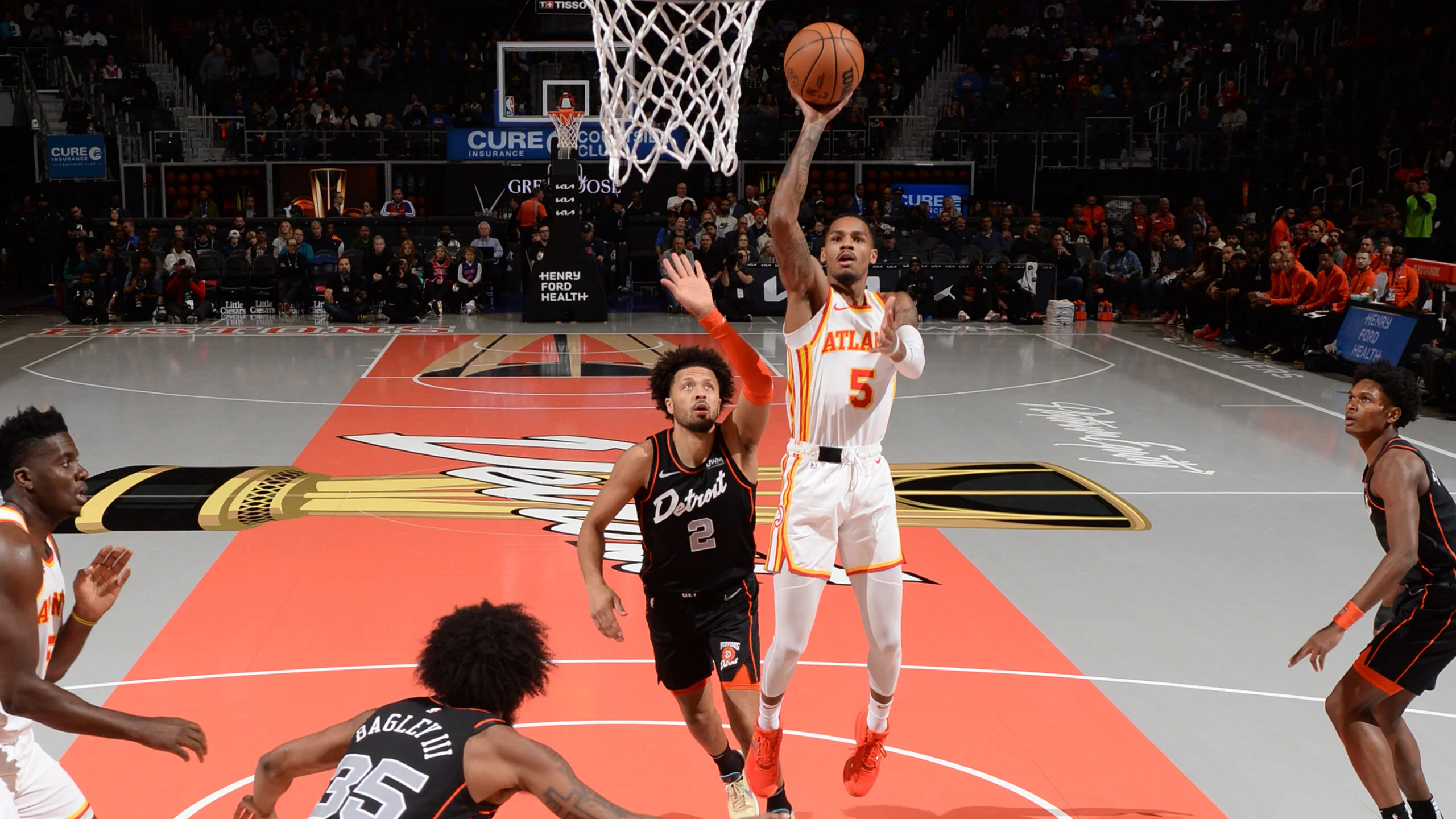
The matchup between the Atlanta Hawks vs Detroit Pistons Match Player Stats showcased a dynamic contest highlighting emerging talent, veteran leadership, and tactical execution. Both teams entered the game aiming to assert their position in the Eastern Conference standings, relying on star players, complementary role contributions, and bench depth. From the opening tip-off to the final buzzer, the statistical narrative reflected a balance of offensive efficiency, defensive effort, rebounding control, and situational execution. The detailed player stats offer insight into how scoring, ball movement, and defensive adjustments shaped the outcome of this high-intensity NBA contest.
First Quarter Momentum and Early Scoring Trends
The first quarter set the tone with Atlanta Hawks vs Detroit Pistons Match Player Stats emphasizing perimeter spacing and pick-and-roll actions, while Detroit focused on interior scoring and fast-break opportunities. Trae Young quickly established his offensive rhythm, scoring 11 points with step-back three-pointers and penetrating drives. Cade Cunningham responded for the Pistons with 9 points in the opening frame, combining mid-range jumpers with fast-break finishes. Field goal percentages in the first quarter slightly favored Detroit at 52 percent compared to Atlanta’s 49 percent. Early rebounds were competitive, but the Pistons’ control of offensive boards hinted at potential second-chance opportunities shaping the game later.
Trae Young’s Offensive Leadership
Trae Young led the Hawks with an impressive 33 points, 12 assists, and 5 rebounds, Atlanta Hawks vs Detroit Pistons Match Player Stats demonstrating his dual-threat capabilities as a scorer and playmaker. Shooting 13-of-24 from the field and 5-of-11 from three-point range, Young created opportunities both for himself and his teammates. His high basketball IQ allowed him to navigate defensive pressure, drawing double teams and finding open shooters such as De’Andre Hunter and Bogdan Bogdanović. Young’s late-quarter surge, including a step-back three-pointer in a critical fourth-quarter possession, kept Atlanta in contention during the game’s most intense moments.
De’Andre Hunter’s Efficient Scoring and Defense
De’Andre Hunter provided balanced production, finishing with 22 points, 7 rebounds, and 3 assists. Hunter’s perimeter shooting and mid-range scoring complemented Young’s penetration, stretching Detroit’s defensive coverage. Defensively, Hunter contributed a pair of steals and multiple contested shots, limiting Pistons’ secondary scoring opportunities. His ability to score efficiently while maintaining defensive focus added stability to Atlanta’s rotations, especially during pivotal third-quarter stretches.
Cade Cunningham’s Scoring and Playmaking Impact
Cade Cunningham anchored Detroit’s offense with 31 points, 8 assists, and 6 rebounds. Shooting 12-of-23 from the field and 4-of-9 from three-point range, Cunningham demonstrated versatility and poise under pressure. His third-quarter scoring surge included a 10–4 run that temporarily gave the Atlanta Hawks vs Detroit Pistons Match Player Stats a narrow lead. Cunningham’s penetration forced defensive collapses, creating open shots for teammates such as Jaden Ivey and Saddiq Bey. Additionally, his ability to convert free throws at a 9-of-10 rate contributed to Detroit’s efficiency during critical possessions.
Saddiq Bey’s Perimeter Efficiency
Saddiq Bey contributed 19 points and 6 rebounds for Detroit, shooting 7-of-13 from the field and hitting four three-Atlanta Hawks vs Detroit Pistons Match Player Stats. Bey’s floor spacing complemented Cunningham’s drives, creating open perimeter opportunities that stretched Atlanta’s defensive rotations. He also contributed defensively with two steals and effective contesting of Atlanta’s outside shooters, reinforcing his dual-role impact on both ends of the floor.
Clint Capela’s Interior Presence
Clint Capela provided Atlanta with an anchor inside, recording 15 points, 12 rebounds, and 3 blocks. Capela’s offensive rebounds generated second-chance points that kept the Atlanta Hawks vs Detroit Pistons Match Player Stats competitive during runs in the second and third quarters. Defensively, his shot-blocking altered multiple Detroit attempts in the paint and limited easy finishes for Pistons’ big men. His plus-minus rating reflected a significant impact during key rotations, particularly when Detroit attempted to exploit Atlanta’s interior defense.
Jaden Ivey’s Aggressive Play
Jaden Ivey added 24 points and 5 assists for Atlanta Hawks vs Detroit Pistons Match Player Stats, providing dynamic scoring and playmaking from the backcourt. Ivey’s athletic drives to the rim generated highlight plays and fouls, contributing to his 6-of-7 free-throw performance. His ability to attack in transition pushed Atlanta’s defense to its limits, while his perimeter shooting added spacing to the Pistons’ offense. Ivey’s contributions during the third quarter helped maintain Detroit’s offensive momentum when Atlanta attempted to mount a comeback.
Rebounding Battle and Frontcourt Statistics
Rebounding proved pivotal in possession control and second-chance opportunities. Atlanta Hawks vs Detroit Pistons Match Player Stats totaled 46 rebounds, with Capela and Hunter combining for 21 boards. Detroit slightly outperformed with 48 total rebounds, led by Cunningham, Bey, and Isaiah Stewart’s contributions. Stewart added 12 points and 9 rebounds while anchoring the defensive glass. The close rebounding numbers reflected a physically contested game, but Detroit’s marginal edge in offensive rebounds translated into crucial extra possessions.
Bench Production and Depth Contributions
Bench scoring impacted momentum and defensive stability for both teams. Atlanta’s reserves, including Bogdan Bogdanović and Kevin Huerter, contributed 15 combined points, providing perimeter scoring and spacing during critical stretches. Atlanta Hawks vs Detroit Pistons Match Player Stats bench, led by Alec Burks and Jaden Hardy, added 18 points, supporting Cunningham and Ivey in maintaining offensive pressure. Depth performance proved particularly important in the third quarter, when rotational adjustments and bench minutes influenced tempo and scoring consistency.
Shooting Efficiency and Comparative Statistics
Field goal efficiency slightly favored Atlanta Hawks vs Detroit Pistons Match Player Stats at 49 percent compared to Atlanta’s 47 percent. Three-point accuracy was competitive, with the Pistons shooting 38 percent and the Hawks converting 37 percent. Free-throw performance was nearly identical, with Atlanta making 17-of-21 attempts and Detroit 18-of-22. These marginal differences, combined with efficiency in key possessions, cumulatively influenced the final score.
Turnover Management and Ball Movement
Turnover control was decisive in possession management. Atlanta Hawks vs Detroit Pistons Match Player Stats committed 14 turnovers, while Detroit limited mistakes to 11, providing extra scoring opportunities. Assist totals were closely matched, with Atlanta recording 27 and Detroit 28, reflecting balanced ball distribution and efficient shot creation. Young and Cunningham orchestrated their respective offenses effectively, highlighting the importance of individual playmaking in maintaining team rhythm.
Third Quarter Tactical Adjustments
The third quarter represented a crucial phase for momentum shifts. Atlanta increased defensive pressure on Detroit’s perimeter shooters, temporarily limiting three-point opportunities. Capela’s interior presence and Hunter’s perimeter defense forced multiple contested shots. Atlanta Hawks vs Detroit Pistons Match Player Stats countered with Ivey and Bey capitalizing on transition opportunities and Cunningham utilizing pick-and-roll actions to create open shots. The quarter exemplified how strategic adjustments and rotations directly reflected in statistical performance and scoring runs.
Fourth Quarter Clutch Performance
Clutch execution ultimately determined the game’s outcome. In the final five minutes, Cunningham scored 8 points, including a critical three-pointer and a driving layup, extending Atlanta Hawks vs Detroit Pistons Match Player Stats lead. Saddiq Bey added a pivotal mid-range jumper, while Ivey generated points in transition. For Atlanta, Young scored 7 points during the same span, but missed opportunities from three-point range and limited second-chance points hindered their comeback. Defensive rebounds by Detroit in the closing moments prevented Atlanta from mounting a decisive rally.
Advanced Metrics and Efficiency Ratings
Advanced statistics underscored Atlanta Hawks vs Detroit Pistons Match Player Stats marginal efficiency advantage. Cunningham’s true shooting percentage exceeded 61 percent, while Ivey and Bey posted positive plus-minus differentials. Atlanta’s efficiency was strong through Young and Capela, but slight differences in turnover margin, rebounding efficiency, and late-game scoring contributed to Detroit’s overall edge. Advanced metrics confirmed that small statistical advantages in high-leverage moments often determine game outcomes.
Tactical Themes Reflected in Player Stats
The statistical breakdown reflects each team’s strategic focus. Atlanta emphasized pick-and-roll execution with Young as the focal point, supported by Capela’s interior scoring and rebounding. Detroit relied on a combination of backcourt penetration from Cunningham and Ivey, spacing via Bey, and second-chance points from offensive rebounds. Defensive rotations, bench efficiency, and efficient scoring in transition and half-court sets provided Detroit with the edge necessary to secure the victory.
Conclusion
The Atlanta Hawks vs Detroit Pistons Match Player Stats matchup highlights how a combination of star performance, team efficiency, and clutch execution determines the outcome of closely contested NBA games. Trae Young’s 33-point, 12-assist performance and Clint Capela’s double-double showcased Atlanta’s offensive firepower and interior presence, while De’Andre Hunter provided critical two-way support. Despite these efforts, Detroit’s balanced attack led by Cade Cunningham’s 31 points, Jaden Ivey’s dynamic drives, and Saddiq Bey’s perimeter efficiency gave the Pistons the edge.
You Msy Also Read: Houston Rockets vs Utah Jazz Match Player Stats
