Introduction
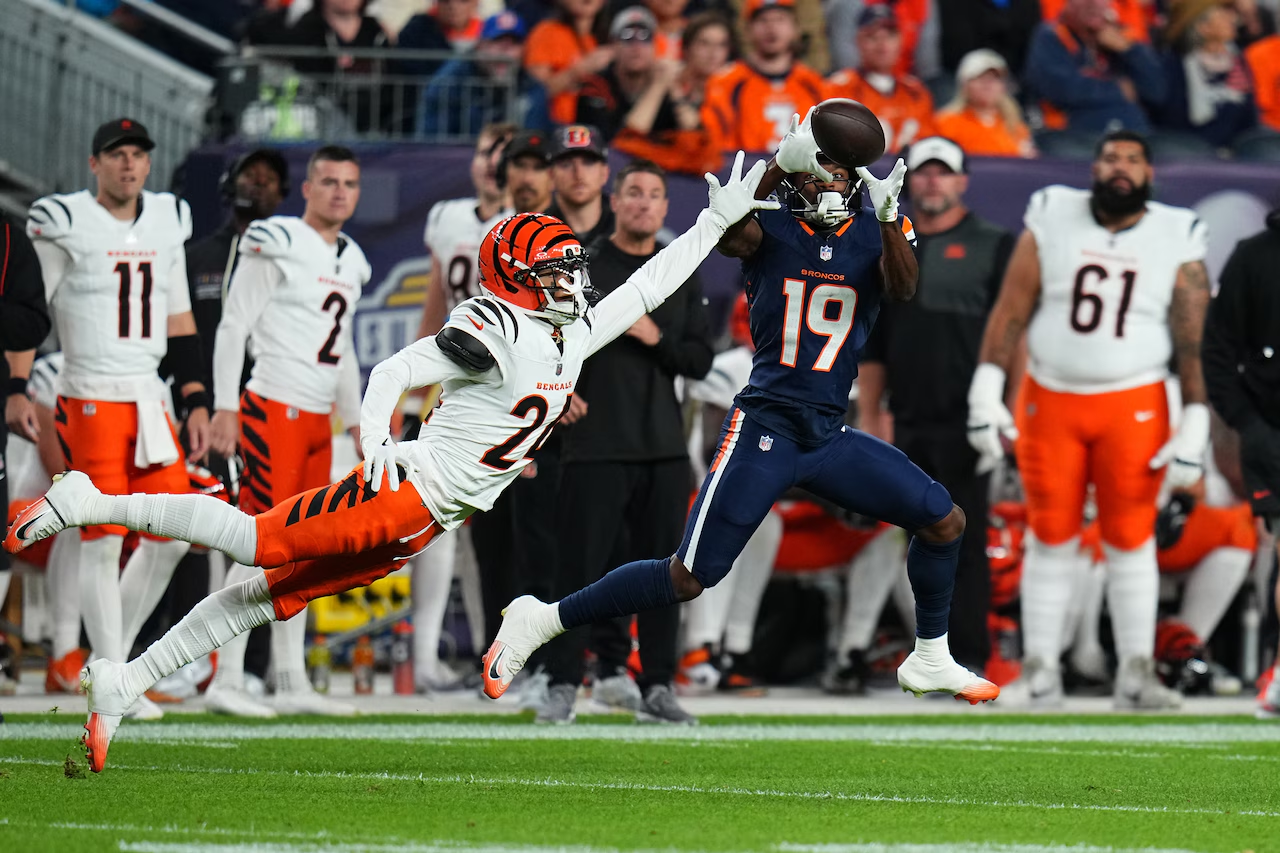
The matchup between the Bengals vs Denver Broncos Match Player Stats delivered a compelling contest defined by quarterback precision, defensive adjustments, explosive skill-position performances, and situational execution. Both franchises entered the game seeking momentum within their respective conferences, understanding that midseason statistical consistency often determines playoff trajectories. From the opening kickoff to the final whistle, the game evolved into a strategic battle shaped by passing efficiency, rushing balance, turnover differential, red-zone conversion rates, and defensive pressure metrics. A full evaluation of the player statistics reveals how marginal advantages in execution ultimately separated the two teams in a competitive AFC showdown.
First Quarter Offensive Rhythm and Defensive Schemes
The opening quarter reflected cautious but efficient offensive execution from both sides. Bengals vs Denver Broncos Match Player Stats leaned on quick timing routes and inside zone runs to establish rhythm, while Denver balanced short passes with outside rushing attempts. Early yardage totals were nearly identical, with both teams sustaining methodical drives but struggling slightly in red-zone efficiency. The Bengals opened scoring with a field goal following a 12-play drive, while Denver answered with a touchdown pass after capitalizing on favorable field position. First-quarter statistics highlighted balanced possession time, minimal penalties, and a focus on ball security, setting the stage for a disciplined and competitive matchup.
Joe Burrow’s Passing Efficiency and Pocket Command
Joe Burrow delivered an efficient and poised performance, Bengals vs Denver Broncos Match Player Stats completing 27 of 36 passes for 312 yards, 3 touchdowns, and 1 interception. Burrow demonstrated strong pocket awareness, neutralizing Denver’s pass rush with quick releases and accurate intermediate throws. His passer rating exceeded 105, reflecting consistent efficiency. A second-quarter touchdown strike to Ja’Marr Chase on a 22-yard fade route highlighted Burrow’s ability to place the ball precisely under tight coverage. Beyond the raw numbers, his leadership in third-down scenarios proved pivotal, converting multiple drives into scoring opportunities.
Ja’Marr Chase and Tee Higgins Receiving Impact
Ja’Marr Chase recorded 9 receptions for 128 yards and 2 touchdowns, serving as the primary offensive catalyst. His ability to create separation against Denver’s secondary repeatedly extended drives. Tee Higgins added 6 catches for 84 yards, consistently moving the chains on third downs. Together, Chase and Higgins accounted for over 200 receiving yards, forming the backbone of Bengals vs Denver Broncos Match Player Stats passing attack. Their combined production forced Denver’s defense to adjust coverage schemes throughout the game.
Joe Mixon’s Rushing Contribution and Offensive Balance
Joe Mixon contributed 87 rushing yards on 18 carries and added 3 receptions for 25 yards. While he did not score a touchdown, Bengals vs Denver Broncos Match Player Stats steady production maintained offensive balance and prevented Denver from focusing exclusively on the passing game. His 16-yard run in the third quarter set up a red-zone opportunity that extended Cincinnati’s lead.
Russell Wilson’s Quarterback Performance
Russell Wilson completed 24 of 38 passes for 276 yards, 2 touchdowns, and 1 interception. Wilson showcased mobility and deep-ball accuracy, connecting on multiple chunk plays in the second half. His 31-yard touchdown pass to Courtland Sutton in the third quarter narrowed the deficit and energized Bengals vs Denver Broncos Match Player Stats sideline. However, a fourth-quarter interception halted a promising comeback drive, proving costly in the final outcome.
Courtland Sutton and Jerry Jeudy Receiving Output
Courtland Sutton led Bengals vs Denver Broncos Match Player Statswith 7 receptions for 101 yards and a touchdown, using size and physicality to challenge Cincinnati’s secondary. Jerry Jeudy added 6 catches for 72 yards, contributing crucial first-down receptions. The duo’s combined yardage kept Denver competitive in total offensive production, particularly during the second half.
Javonte Williams and the Ground Game Efficiency
Javonte Williams produced 78 rushing yards on 16 carries, averaging nearly five yards per attempt. His physical running style generated several first-down conversions and maintained balance within Bengals vs Denver Broncos Match Player Stats offense. Though he did not score, his steady production supported Wilson’s passing game and sustained time-of-possession competitiveness.
Defensive Standouts and Sack Totals
Bengals vs Denver Broncos Match Player Stats defensive unit generated consistent pressure, with Trey Hendrickson recording 2 sacks and multiple quarterback hits. Linebacker Logan Wilson added 10 tackles and a pass breakup. For Denver, linebacker Josey Jewell tallied 11 tackles, while defensive end Zach Allen contributed a sack and forced fumble. Defensive pressure and disciplined coverage schemes influenced third-down efficiency and red-zone outcomes.
Turnover Differential and Red-Zone Efficiency
Turnover margin remained even, as both teams recorded one interception. However, Bengals vs Denver Broncos Match Player Stats converted 3 of 4 red-zone trips into touchdowns, compared to Denver’s 2 of 4. This efficiency differential proved decisive. Red-zone defensive stops in the fourth quarter prevented Denver from tying the game, emphasizing the importance of situational discipline.
Third-Down Conversion and Time of Possession Metrics
Bengals vs Denver Broncos Match Player Stats converted 9 of 14 third-down attempts, reflecting consistent offensive execution. Denver managed 6 of 13 conversions. Time of possession slightly favored the Bengals at 32 minutes compared to Denver’s 28, enabling sustained offensive rhythm and limiting opportunities for the Broncos to mount a comeback.
Fourth Quarter Execution and Clutch Performance
The final quarter underscored Cincinnati’s composure. Burrow orchestrated a clock-controlling drive culminating in a field goal that extended the lead to two possessions. Denver attempted a late surge, but a critical interception and defensive stop sealed the outcome. Cincinnati’s ability to maintain discipline under pressure highlighted their situational strength.
Advanced Metrics and Statistical Comparisons
Advanced metrics reinforced Bengals vs Denver Broncos Match Player Stats edge. Burrow averaged over 8.5 yards per attempt, while Wilson averaged just over 7.2. Cincinnati’s red-zone efficiency exceeded 75%, compared to Denver’s 50%. Pressure rate analytics revealed consistent disruption of Wilson’s timing. Though total yardage remained competitive, execution in high-leverage moments defined the statistical narrative.
Conclusion
The Bengals vs Denver Broncos Match Player Stats matchup demonstrated how marginal advantages in efficiency, red-zone execution, and quarterback composure determine outcomes in closely contested NFL games. Joe Burrow’s precise passing and Ja’Marr Chase’s explosive receiving performance anchored Cincinnati’s offense, while Joe Mixon provided balance. For Denver, Russell Wilson, Courtland Sutton, and Javonte Williams delivered competitive production, but late-game inefficiencies and red-zone limitations hindered a comeback effort. Ultimately, superior third-down conversions, disciplined defensive pressure, and effective time management secured Cincinnati’s victory. The comprehensive player statistics emphasize a consistent theme in professional football:
You May Also Read: 49ers vs Seahawks Match Player Stats
