Introduction
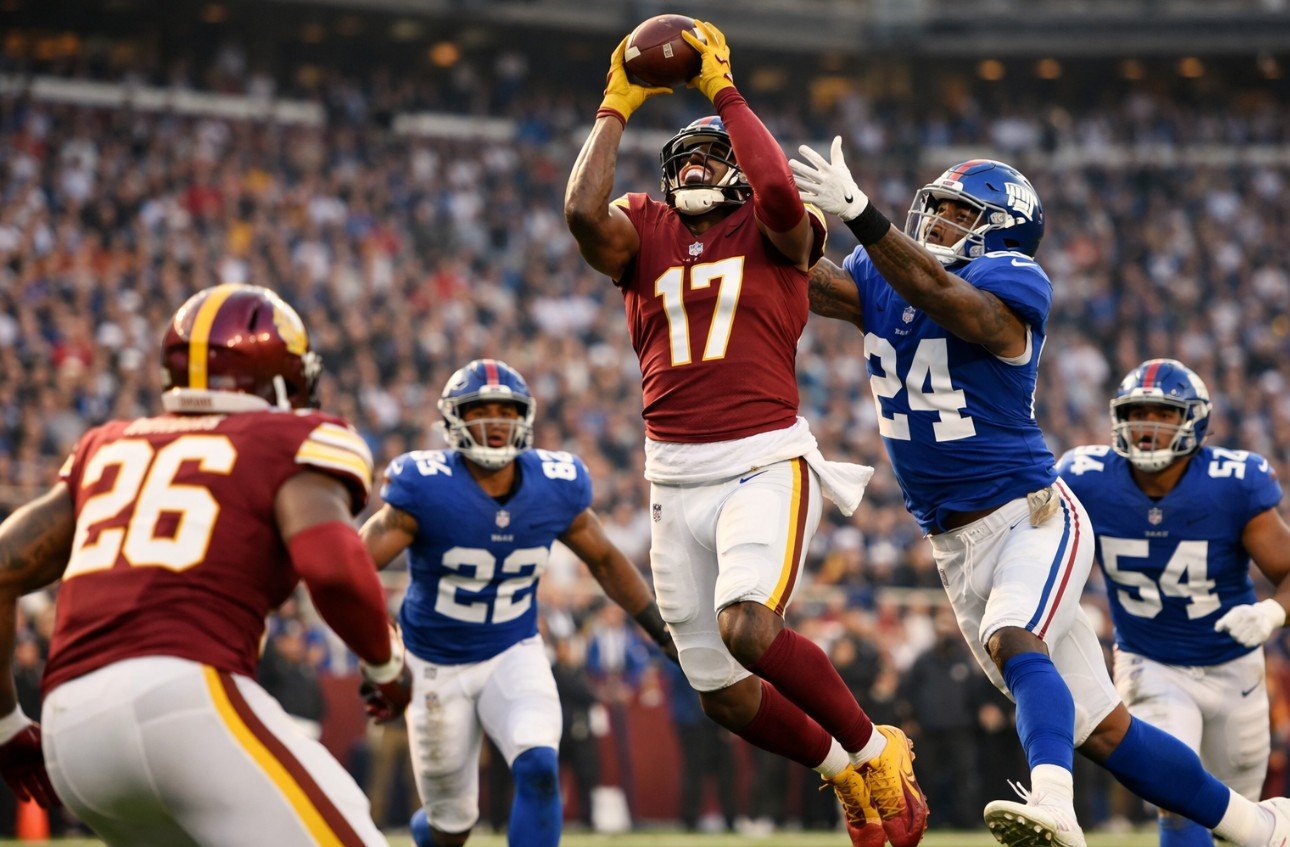
When the New York Giants vs Washington Commanders Match Player Stats, it’s more than just another game on the schedule — it’s a divisional rivalry rooted deep in NFC East history. With decades of competition between these franchises, games often come down to key plays by star athletes and strategic execution from coaches. Player statistics from these matchups offer fans and analysts alike a detailed snapshot of how individual performances shaped the flow and outcome of the game. Below is a comprehensive look at how the players performed across offense, defense, and special teams in a typical Giants vs Commanders matchup.
Quarterback Performances
Quarterback statistics are the centerpiece of any New York Giants vs Washington Commanders Match Player Stats game analysis. For the Giants, their quarterback often balances precision passing with smart decision-making under pressure. High completion percentage, passing yards, and touchdown-to-interception ratio are key metrics that reflect offensive efficiency. In contrast, the Commanders’ quarterback frequently shows versatility — combining short-to-intermediate accuracy with occasional deep shots that stretch defenses. Key players often record total yards of offense, adjusting plays at the line and scrambling when necessary.
Passing Game Distribution and Receiver Production
In matchups between the New York Giants vs Washington Commanders Match Player Stats, wide receiver and tight end statistics highlight how each team distributes the ball. On the Giants’ side, multiple targets typically contribute to reception totals, showing balance between primary wide receivers and slot threats. Stat lines often reveal receptions, receiving yards, yards after catch (YAC), and average depth of target (aDOT) as crucial indicators of success. For the Commanders, receivers emphasize physical contested catches and explosive gains downfield.
Running Back Usage and Rushing Efficiency
Rushing statistics illustrate how each team attempts to control tempo and field position. New York Giants vs Washington Commanders Match Player Stats running backs often post high attempt counts with consistent yards per carry (YPC), contributing to sustained drives. Commanders’ backs typically offer a blend of power and agility, reflected in broken tackles, touchdowns, and run-pass balance in play calling. Quarterback rushing numbers also surface as key metrics, particularly in short-yardage or third-and-long scenarios. These contributions become especially important in tight games where controlling the clock impacts overall effectiveness.
Offensive Line Performance Indicators
While offensive linemen rarely appear in traditional stat sheets, their performance can be inferred from sack numbers allowed, rush yardage totals, and quarterback time in pocket. New York Giants vs Washington Commanders Match Player Stats’ offensive line often reflects strong pocket stability with lower pressures allowed, while the Commanders’ line may show more success in run-blocking efficiency. These indirect metrics help explain how offensive consistency and protection schemes influenced the game’s flow.
Defensive Line Pressure and Sack Totals
Defensive line statistics are foundational in rivalries that hinge on stopping the run and pressuring opposing quarterbacks. New York Giants vs Washington Commanders Match Player Stats defenders frequently appear with high sack totals, tackles for loss (TFL), and quarterback pressures, disrupting Commanders’ offensive rhythm. Commanders’ defensive linemen often match this intensity with their own pressure schemes, reflected in shared QB hits and forced incompletions on third downs. The ability to generate pressure affects passing efficiency and often correlates with turnovers or stalled drives. Match player stats in this area provide insight into which front controlled the trenches.
Linebacker Contributions and Tackling Efficiency
Linebackers play a pivotal role, particularly in stopping the run and providing intermediate pass coverage. Giants linebackers typically show robust tackle counts, demonstrating range and awareness. Commanders’ linebackers often contribute to pass defense with pass breakups (PBUs) and coverage snaps that minimize yardage after the catch. Tracking solo tackles and assisted tackles helps paint a picture of defensive balance, showing how each team adapted to offensive schemes throughout the game.
Secondary Coverage and Turnovers
Turnovers are game-changing events, and defensive backs often lead the charge with interceptions, pass deflections, and forced fumbles. New York Giants vs Washington Commanders Match Player Stats’ secondary performance often includes key coverage snaps, reflecting how well they limited explosive plays. Commanders defensive backs typically post strong pass breakup ratios and interception timing, turning defensive opportunities into offensive momentum. Turnover statistics, including takeaways and turnover differential, frequently dictate field position and scoring opportunities in close matchups.
Special Teams Impact
Special teams performances — though sometimes overlooked — play a crucial strategic role. Placekicking accuracy, measured by field goal percentage and extra point success, contributes directly to scoring totals. Punting metrics like average punt yardage and net yardage impact field position battles. Return specialists on both teams may create shifts with punt return yards and kickoff return yards, tilting field position in favor of the offense. Penalty yardage on special teams can also swing momentum, especially in tight games where a short field leads to points.
Third-Down Efficiency and Situational Stats
Third-down statistics provide insight into how well offenses sustain drives and how defenses perform under pressure. New York Giants vs Washington Commanders Match Player Stats’ third-down conversions may reflect reliance on short passes and high-efficiency play calls, while Commanders often mix intermediate throws and rushing plays to keep defenses guessing. Defensive third-down stops — reflected in percentage of stops forced — reveal how well each defense adjusted. These situational stats often separate winners from losers in rivalry games where extended drives and short fields are common.
Red-Zone Performance and Scoring Outcomes
Red-zone efficiency is one of the most telling statistical categories. New York Giants vs Washington Commanders Match Player Stats’ red-zone stats often reflect a willingness to trust both passing and rushing options near the goal line, showing multiple touchdown providers. Commanders may emphasize physical playcalling and quarterback-run situations, reflected in red-zone rushing success rates. Scoring efficiency in these situations demonstrates how each team converts opportunities into points and how defenses tighten up under pressure.
Time of Possession and Drive Statistics
Time-of-possession statistics provide context for how each team controlled the pace of play. New York Giants vs Washington Commanders Match Player Stats’ offensive style may reflect quicker scoring sequences with explosive plays, while Commanders often aim for longer, ball-control drives. These differences show how strategic decisions affected tempo and allowed defenses periods of rest and adaptation. Average drive length and plays per drive reflect offensive rhythm, while points per possession highlights scoring effectiveness.
Penalty and Discipline Metrics
Penalties often compensate for execution breakdowns, and match player stats in this area show how discipline impacted opportunities. New York Giants vs Washington Commanders Match Player Stats’ penalty totals — especially holding and pass interference penalties — can extend opponents’ drives or stall explosive moments. Commanders may show similar penalty categories, reflecting aggressive play. Each penalty’s impact on field position and momentum shifts adds nuance to how disciplined execution played out during the game.
Emerging Stars and Statistical Highlights
Rivalry games frequently produce breakout performances. Whether a rookie defensive back records his first NFL interception, a wide receiver posts a season-high in receiving yards, or a linebacker leads all tacklers, individual performances often define the narrative. New York Giants vs Washington Commanders Match Player Stats help identify which emerging players influenced key moments and how they might shape future contests between these teams.
Coaching Influence Reflected in Stats
New York Giants vs Washington Commanders Match Player Stats statistics also reflect coaching philosophies and adjustments. Giants coaching may emphasize situational aggressiveness, evident in defensive pressure stats. Commanders coaching may focus on ball control and minimizing mistakes, reflected in lower turnover counts. Analyzing decision-based stats — such as fourth-down attempts, strategic punts, and field goal choices — highlights how coaches responded to game flow.
Conclusion
The New York Giants vs Washington Commanders match player stats offer a comprehensive lens through which fans and analysts can understand the dynamics of rivalry football. From quarterback precision and rushing dominance to defensive resilience and special teams contributions, every statistic adds depth to how the game unfolded. Rather than focusing solely on the final score, these player stats tell the story of individual effort, strategic execution, and situational performance.
You May Also Read: Miami Dolphins vs Buffalo Bills Match Player Stats
