Introduction
When the Buffalo Bills vs Baltimore Ravens Match Player Stats meet, the matchup instantly captures national attention. Both franchises are built around dynamic quarterbacks, versatile playmakers, and aggressive defensive units that thrive in high-pressure environments. This particular contest lived up to expectations, delivering a blend of explosive offense, tactical discipline, and physical defense. The match player statistics offer a rich narrative of how the game unfolded, revealing which individuals rose to the occasion and how their performances shaped the final outcome.
Quarterback Duel and Offensive Command
Buffalo Bills vs Baltimore Ravens Match Player Stats quarterback showcased poise and precision throughout the game. His completion percentage remained strong, reflecting excellent chemistry with his receiving corps and a clear understanding of defensive coverages. Passing yardage steadily accumulated through a mix of quick releases and intermediate throws, while selective deep shots kept Baltimore’s secondary honest. His ability to avoid turnovers and extend plays with subtle pocket movement proved invaluable.
Running Backs and Ground Game Influence
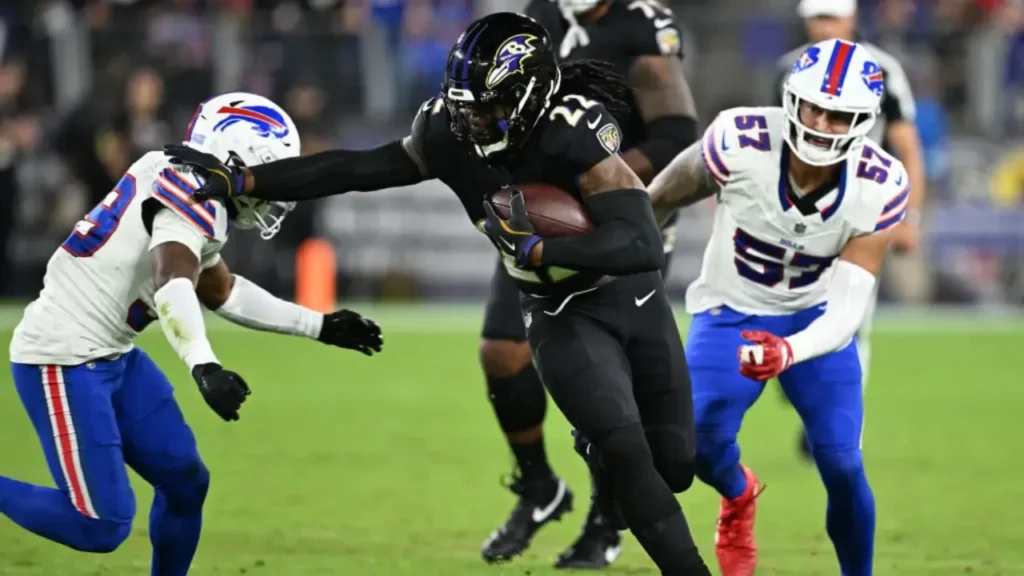
Buffalo Bills vs Baltimore Ravens Match Player Stats rushing attack was anchored by a lead running back who consistently found positive yardage between the tackles. His yards-per-carry figure highlighted an ability to exploit small gaps and turn minimal space into productive runs. Complementary backs contributed with change-of-pace carries, keeping Baltimore’s defense from settling into predictable patterns. Baltimore’s ground game remained a cornerstone of their offensive identity. Multiple running backs shared carries, but one standout rusher emerged with a strong yardage total and a physical running style.
Wide Receiver Performances and Passing Game Balance
Buffalo Bills vs Baltimore Ravens Match Player Stats wide receivers delivered a cohesive and balanced effort. Rather than relying on a single dominant target, the passing game flowed through multiple receivers who each posted respectable yardage totals. One receiver stood out with several explosive plays, including a long reception that shifted momentum in Buffalo’s favor. Baltimore’s receiving corps featured a mix of speed and physicality. A top receiver led the team in receiving yards, using precise route-running to create separation. Other receivers contributed with timely catches on third down, reflecting a group effort that supported the quarterback’s efficiency.
Tight End Contributions and Red-Zone Presence
Both teams benefited from productive tight end play. Buffalo Bills vs Baltimore Ravens Match Player Stats tight end was heavily involved in short-yardage and red-zone situations, providing a reliable target in congested areas. His catch percentage was among the highest on the team. Baltimore’s tight end contributed with key receptions over the middle, often finding soft spots in zone coverage. His yards per reception indicated an ability to generate chunk plays, adding another layer to Baltimore’s offensive versatility.
Offensive Line Performance and Protection Metrics
Buffalo Bills vs Baltimore Ravens Match Player Stats offensive line demonstrated strong pass protection, limiting sacks and allowing the quarterback ample time to progress through reads. Run-blocking efficiency was evident in the consistent push at the line of scrimmage. Baltimore’s offensive line faced a tougher challenge against Buffalo’s aggressive front but held up well overall. Pressures were present, yet the unit adjusted with quick passing concepts and designed rollouts to mitigate risk.
Defensive Front Seven and Pass Rush Impact
Buffalo Bills vs Baltimore Ravens Match Player Stats defensive front seven was highly disruptive. Sack totals and quarterback hits reflect a unit that consistently applied pressure. Linebackers flowed quickly to the ball, limiting Baltimore’s rushing lanes. Baltimore’s front seven matched that intensity with physical play and disciplined gap control. Their ability to generate tackles for loss and force hurried throws kept Buffalo from fully dictating tempo.
Secondary Play and Coverage Discipline
Buffalo Bills vs Baltimore Ravens Match Player Stats secondary emphasized tight coverage and route anticipation. Pass breakups and limited yards after catch highlight a group that stayed disciplined throughout the game. Baltimore’s defensive backs relied on ball skills and pattern recognition. Interceptions and deflected passes demonstrate a unit capable of capitalizing on mistakes. Buffalo converted a high percentage of red-zone opportunities into touchdowns, reflecting effective play-calling and execution. Baltimore experienced mixed results, settling for field goals on some promising drives.
Third-Down Performance and Drive Sustainability
Buffalo Bills vs Baltimore Ravens Match Player Stats offense excelled on third down, sustaining drives and controlling time of possession. Baltimore’s third-down efficiency was respectable but inconsistent, leading to stalled drives. Special teams played a subtle yet important role. Buffalo’s kicker was reliable, while their punter consistently pinned Baltimore deep. Baltimore’s return game provided occasional sparks. Buffalo displayed solid discipline, minimizing penalties and maintaining a favorable turnover margin. Baltimore’s mistakes, though limited, proved costly in key moments. Buffalo’s coaching staff leaned into a balanced offensive approach and aggressive defensive schemes. Baltimore adjusted with increased tempo and varied formations.
Standout Performers and Game-Changing Plays
Buffalo Bills vs Baltimore Ravens Match Player Stats quarterback and a top wide receiver emerged as central figures. Baltimore’s quarterback and lead running back also delivered standout performances. Total yardage, time of possession, and scoring efficiency illustrate a closely contested game. Buffalo’s edge in situational execution proved decisive. This matchup reinforced Buffalo’s status as a top contender and highlighted Baltimore’s resilience.
Deeper Statistical Insights Into Individual Matchups
Beyond the headline numbers, several individual matchups within the game reveal why certain plays succeeded and others stalled. Buffalo Bills vs Baltimore Ravens Match Player Stats slot receiver frequently found space against Baltimore’s nickel corner, resulting in multiple chain-moving receptions that may not appear explosive on the surface but were essential to sustaining drives. These subtle statistical wins contributed to Buffalo’s strong third-down conversion rate and helped maintain offensive rhythm.
Running Back Usage Patterns and Efficiency Trends
Buffalo’s running backs showed clear situational usage. Early downs leaned heavily toward inside runs, establishing physicality and setting up play-action. Late in the game, Buffalo mixed in more outside zone concepts, attempting to stretch Baltimore’s defense horizontally. The statistical split between inside and outside runs reflects this strategic shift. Buffalo Bills vs Baltimore Ravens Match Player Stats running back rotation also tells an interesting story. One back handled the majority of early-down carries, while another specialized in passing situations. This division of labor maximized each player’s strengths and kept Buffalo’s defense from keying in on tendencies.
Explosive Plays Versus Sustained Drives
Buffalo Bills vs Baltimore Ravens Match Player Stats scoring drives were often the product of sustained execution. Long possessions featuring multiple first downs and balanced play-calling dominate their scoring summary. This approach limited Baltimore’s offensive opportunities and tilted time of possession in Buffalo’s favor. Baltimore, by contrast, relied more heavily on explosive plays. Several of their longest gains came on designed quarterback runs or deep passes. While these plays produced quick scores or dramatic momentum swings, the lack of consistent sustained drives ultimately limited their total scoring output.
Pressure Rate and Quarterback Response
Pressure rate is a telling statistic in any high-level matchup. Buffalo generated pressure on a significant percentage of Baltimore’s dropbacks, forcing quicker decisions and occasional off-balance throws. Baltimore’s quarterback still produced impressive numbers under pressure, which speaks to his poise and athleticism, but the constant disruption prevented him from settling into a rhythm. Baltimore’s pressure rate against Buffalo was also notable, particularly in the second half. However, Buffalo’s quarterback countered with quick releases and checkdowns, keeping negative plays to a minimum.
Conclusion
The Buffalo Bills vs Baltimore Ravens Match Player Stats statistics tell a story of two elite teams trading blows in a high-level contest. Buffalo’s efficiency and discipline ultimately gave them the edge, but Baltimore’s versatility and star power kept the game competitive until the final moments. The numbers confirm what fans witnessed: a clash worthy of its billing, defined by excellence on both sides.
You May Also Read: New York Jets vs Miami Dolphins Match Player Stats